
By Mohammed Qassem
November 25, 2026
The confrontation in the Strait of Hormuz is no longer confined to a series of mutual military threats between Iran and the United States. It has become a strategic crisis in which economic pressure, maritime control and energy security intersect, ushering in a new period of uncertainty for oil-importing economies.
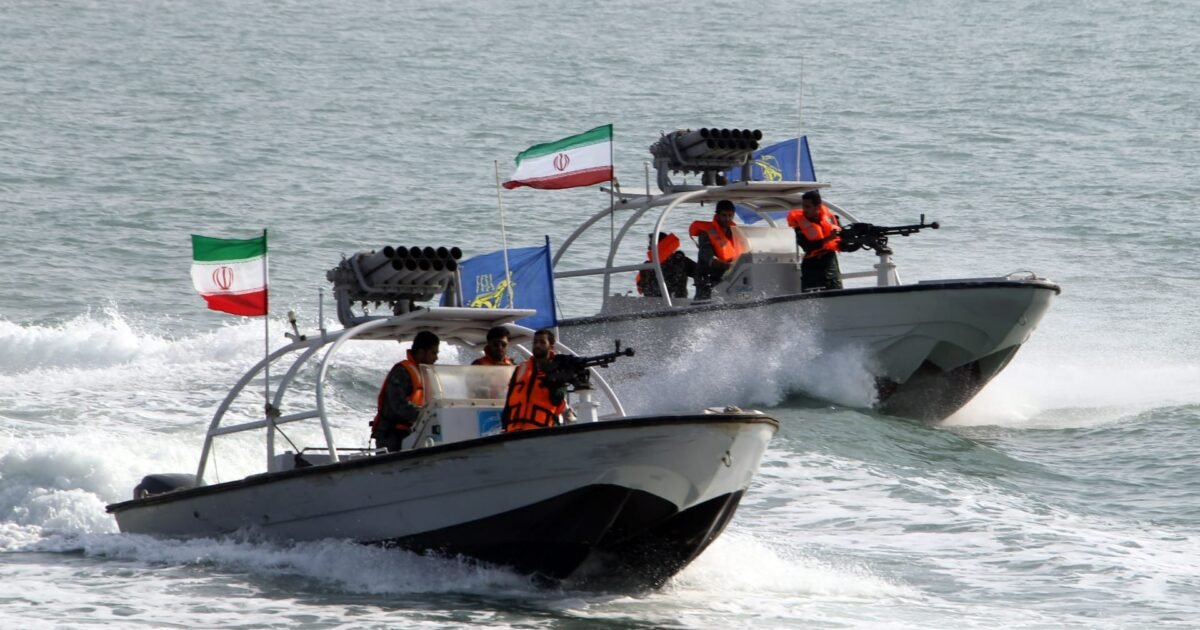
Recent developments on the ground point to a shift toward wearing down commercial shipping traffic, as the U.S. naval blockade continues and Iranian operations against vessels that Tehran accuses of violating its instructions intensify.
This shift highlights the widening scope of the confrontation: its effects are no longer limited to the two warring parties, but have extended to shipping companies, insurers, refineries and global financial markets.
The figures reveal the scale of the shift
According to maritime tracking data reported by Al Jazeera on November 24, the number of vessels transiting the strait fell from 226 in the first week of the month to 125 between November 17 and 23.
The data do not necessarily reflect the full volume of maritime traffic, given the limited ability of tracking systems to monitor some vessels, but they offer an important indication of the level of disruption in the maritime corridor.
Mean while, Reuters reported that oil prices rose in Tuesday trading as markets reassessed the risks stemming from continued attacks on commercial vessels.
Iran’s strategy: shifting the cost of confrontation to the global economy
One strategic interpretation of Iran’s actions is that it is seeking to turn the Strait of Hormuz’s geographic position into a means of applying pressure on the United States and its trading partners.
The continued restrictions on Iranian oil exports give Tehran an incentive to raise the economic and political cost of the blockade imposed on it.
In this context, disruption to shipping becomes a means of applying pressure that goes beyond its direct military impact, affecting the economic interests of countries that are not necessarily involved in the confrontation.
This strategy, however, also carries risks for Iran’s economy and Tehran’s relations with energy-importing countries, particularly if the escalation leads to prolonged disruption of regional trade.
Washington’s dilemma: between the blockade and freedom of navigation
Washington faces a complex equation: imposing restrictions on Iranian exports while maintaining the flow of energy through the Gulf.
The blockade, which aims to reduce the financial resources available to Tehran, could, if Iran continues to retaliate, raise the cost of protecting commercial shipping and complicate relations with economic partners.
Securing a maritime corridor also requires more than a military presence. It requires a level of confidence that will allow shipping companies and insurers to resume commercial operations at an acceptable level of risk.
Here lies the gap between the military capacity to protect shipping and the economic capacity to restore its regular flow.
Asian economies at the heart of the crisis
Asian economies are directly affected by any sustained disruption to Gulf energy exports, given that several of them rely on oil and gas imports from the region.
China, India, Japan and South Korea face challenges involving the diversification of supply sources, the management of strategic reserves and the containment of energy costs.
The crisis may prompt these countries to step up their diplomatic contacts with the parties involved, in search of arrangements that would ensure trade flows remain stable without the confrontation continuing.
Oil is not the only risk
The effects of disruption in Hormuz are not limited to crude oil prices; they extend to multiple sectors, including:
- Liquefied natural gas and electricity supplies.
- Marine insurance and shipping costs.
- Petrochemical and fertilizer industries.
- Food prices and imported goods.
- Inflation and industrial production costs.
The economic effects may emerge gradually, even if oil prices temporarily decline as a result of increased supply from other sources.
The limits of strategic alternatives
Some Gulf countries have pipelines that allow them to export part of their output without passing through the Strait of Hormuz, but these alternatives may not be able to accommodate all the flows that transit the strait.
The effectiveness of alternatives depends on available operating capacity, port infrastructure, the flexibility of transport networks and markets’ ability to absorb changes in export routes.
The spread of security risks to the Red Sea could also complicate some alternative export routes.
Possible scenarios
The scenarios under consideration range from reaching understandings that would allow shipping to resume, to continued confrontation marked by a degree of maritime attrition, to an escalation that spreads to energy facilities and additional trade corridors.
None of these scenarios can be confidently judged more likely in the absence of clear signs of a lasting political settlement.
Actual vessel traffic, insurance prices, energy export levels, and military and diplomatic positions remain key indicators for understanding the direction of the crisis.

Conclusion
The Hormuz crisis highlights how difficult it is to separate military security from economic security in strategic waterways.
Even without a complete closure of the strait, persistent security risks can significantly disrupt international trade and leave energy-importing countries facing challenges that go beyond their ability to directly control the course of the confrontation.
The essence of the conflict is no longer just about who has the ability to close or protect the passage, but who can bear the economic and political cost of a prolonged crisis.