
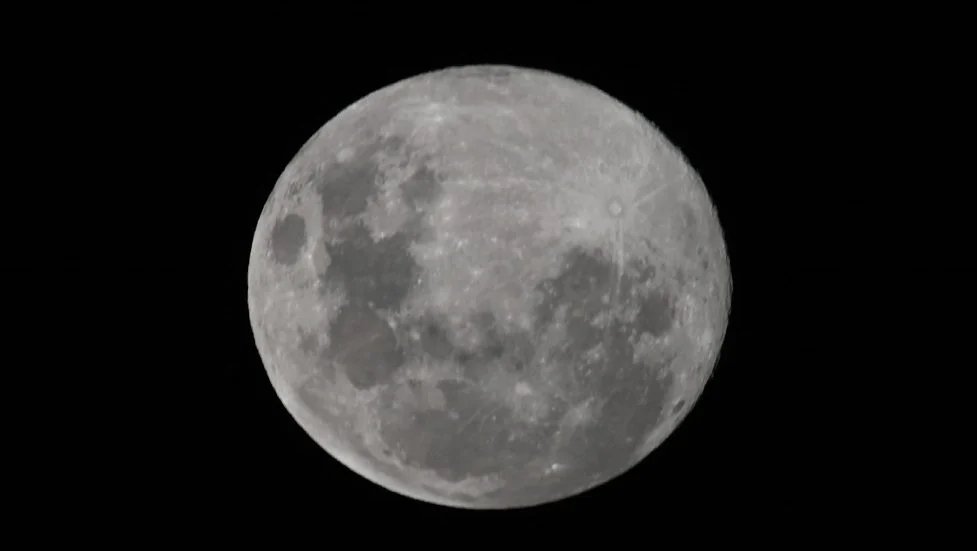
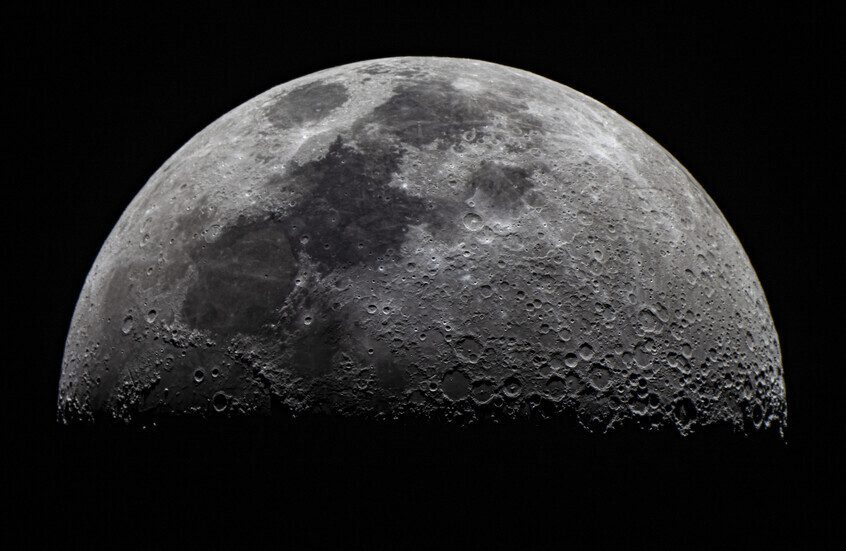
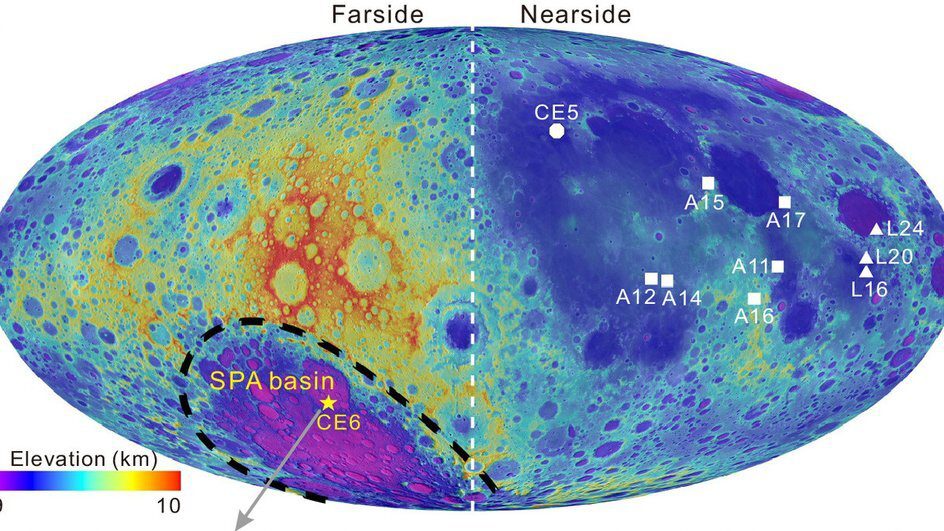
PNAS magazine indicates that the Chinese Chang’e-6 mission contributed to determining this reason, as scientists from the Chinese Academy of Sciences analyzed four small basalt samples collected from the Antarctic-Aitken Basin, which is a giant meteorite crater that occupies nearly a quarter of the surface of the moon, and is considered one of the oldest and deepest craters.
Using a high-resolution mass spectrometer, the researchers compared the isotopic composition of these samples to rocks from the visible side of the Moon collected during the Apollo and Chang’e-5 missions. The main indicator in the comparison was the difference in isotopes of potassium, a moderately volatile element that evaporates easily when heated.
The researchers revealed that the samples from the far side of the moon contained higher proportions of heavy potassium isotopes, while the iron isotopes appeared almost identical.
According to the researchers, this difference is due to exposure to intense heating. When a planet or moon heats up greatly, the light isotopes of potassium evaporate first, while the heavy isotopes remain, which is the “heavy” fingerprint that scientists have observed.
The researchers indicated that the collision that led to the formation of the Antarctica-Aitken Basin was so violent that it penetrated the moon’s crust and melted part of its mantle.
According to the research team, this disaster led to a large-scale redistribution of materials in the interior of the moon, as heat-generating elements, including potassium, rushed towards the visible half, fueling intense and long-term volcanic activity, and contributed to flooding future seas with lava.
As for the far side of the Moon, it has lost some of these volatile components, leaving behind a depleted atmosphere, geologically characterized by the signature of heavy potassium isotopes.
The researchers pointed out that confirming this hypothesis once and for all requires analyzing new soil samples from the far side of the moon.
Source: science.mail.ru
Disclaimer: This news article has been republished exactly as it appeared on its original source, without any modification. We do not take any responsibility for its content, which remains solely the responsibility of the original publisher.
Author:
Published on:2026-01-18 09:50:00
Source: arabic.rt.com
Disclaimer: This news article has been republished exactly as it appeared on its original source, without any modification. We do not take any responsibility for its content, which remains solely the responsibility of the original publisher.
Author: uaetodaynews
Published on: 2026-01-18 13:48:00
Source: uaetodaynews.com