

uaetodaynews.com — 2,000-year-old discovery in England reveals dark Celtic ritual
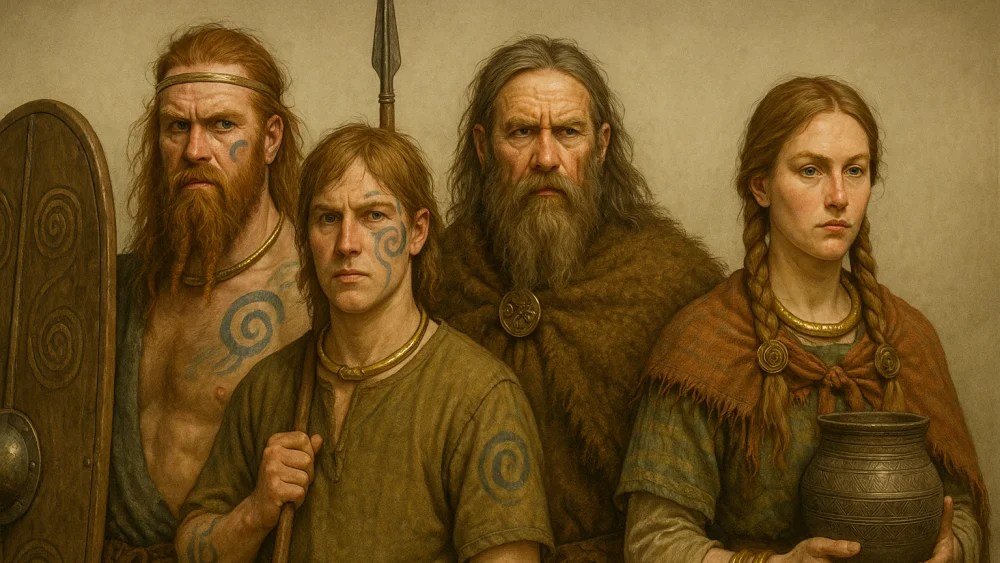
Archaeologists from Bournemouth University have discovered the remains of a teenager buried face down in a hole in Dorset – a sensational find that may be one of the earliest evidence of human sacrifice on British soil. The burial dates back to around 2,000 years ago and sheds new light on the Iron Age ritual practices of the Durotriges, a tribe that inhabited the region before the Roman conquest.
The skeleton was found during excavations of an Iron Age settlement. The body lay without grave goods and in a position that differed sharply from the usual ritual forms. Researchers suggest that the girl’s hands could have been tied. Such treatment of the body indicates rather a violent or ceremonial death.
“It’s like an execution done in a very theatrical manner. The burial position and context indicate deliberate punishment or sacrifice,” commented Dr Miles Russell, Principal Research Fellow in Prehistoric and Roman Archeology at Bournemouth University.
Both residential buildings and a small cemetery were discovered. Personal items of the settlement’s inhabitants, bronze brooches, a bronze bracelet and a bone comb, often combined Roman and Celtic motifs. The findings provide not only insight into daily life in the Iron Age, but also a possible darker aspect of their ritual practices.
First confirmation of matrilineity
Three face-down burials have so far been discovered at this site in Dorset, all of young women. One of them, found in 2010, showed signs of a slit throat, another – discovered in 2024 – showed injuries to the arms and torso.
The exact cause of death of the last girl found has not yet been confirmed: DNA tests are now underway, using further DNA and isotopes, which should clarify her origin, diet and possible diseases. These studies will also help determine whether the victims were local residents or visitors.
Prior to this, DNA research had shown that the Durotriges had a matrilineal social structure. Inheritance went through the maternal line. This confirms some ancient Roman descriptions of Celtic societies, where women acted as large landowners and leaders.
“This is the first time that evidence of matrilineal societies has been documented in prehistoric Western Europe. Men often moved in with their wives’ families, which reinforced the central role of women. If this conclusion is correct, the predominance of women among ritual victims may indicate complex spiritual or political mechanisms within the society,” says Dr. Russell.
The find underscores the importance of archeology in uncovering human stories buried underground – stories that, two thousand years later, can amaze, touch and interest modern people.
Subscribe and read “Science” in
Telegram
Disclaimer: This news article has been republished exactly as it appeared on its original source, without any modification.
We do not take any responsibility for its content, which remains solely the responsibility of the original publisher.
Author:
Published on: 2025-11-02 18:38:00
Source: naukatv.ru
Disclaimer: This news article has been republished exactly as it appeared on its original source, without any modification. We do not take any responsibility for its content, which remains solely the responsibility of the original publisher.
Author: uaetodaynews
Published on: 2025-11-02 16:43:00
Source: uaetodaynews.com