
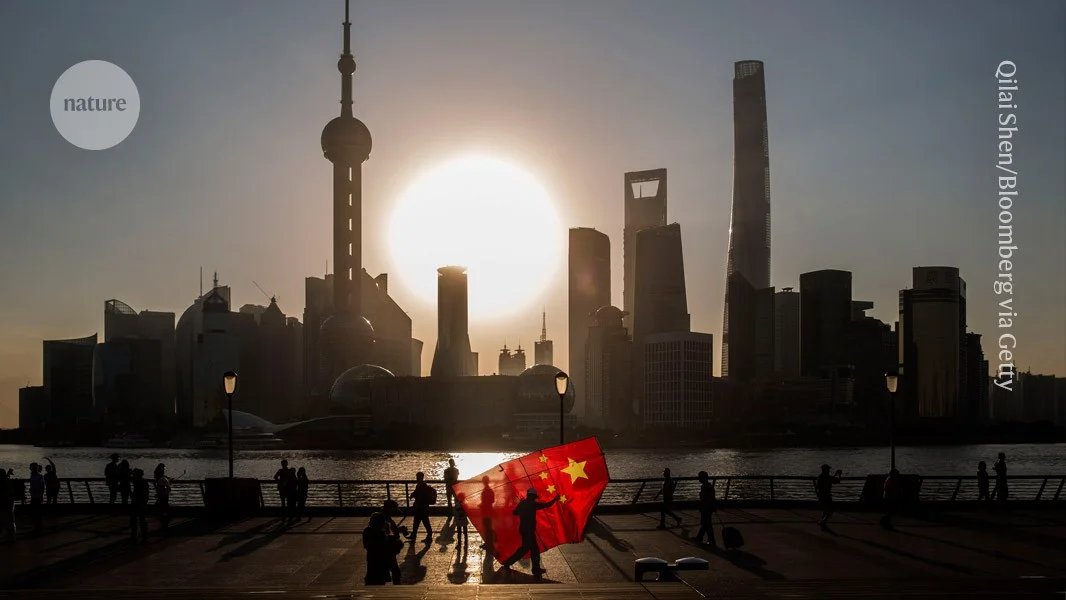

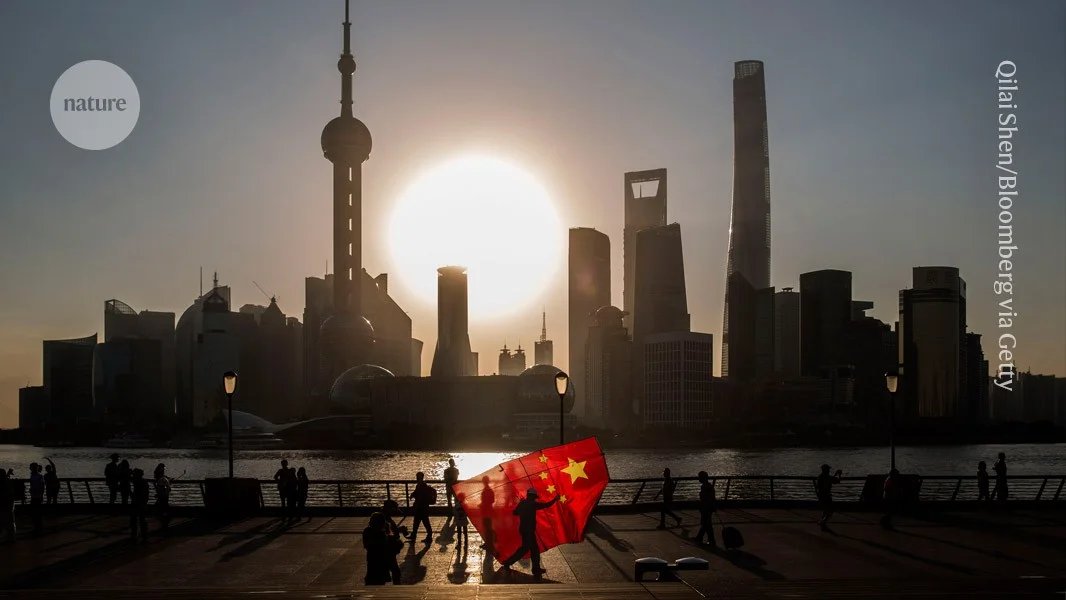

Credit: Qilai Shen/Bloomberg via Getty
China has made no secret of its goal to attract the world’s best scientists. In the past three years, a parade of highly accomplished researchers has emigrated there.
Wolfgang Baumeister, a molecular biologist, started working in China in 2019, following nearly three decades at the Max Planck Institute of Biochemistry in Munich, Germany.
Baumeister is the pioneer of cryogenic-electron tomography, which enables researchers to construct 3D images of large molecules and the insides of cells. For this work, he was awarded Hong Kong’s Shaw Prize for life science and medicine this year. Now based at the iHuman Institute at the ShanghaiTech University in China, he continues to study the molecular machinery involved in type 2 diabetes.
Naturemet with Baumeister in Hong Kong. The following is an edited version of that conversation, and his talk to journalists at the Hong Kong Laureate Forum 2025.
Wolfgang Baumeister receiving the Shaw Prize this year.Credit: Hou Yu/China News Service/VCG via Getty
Why did you decide to move to ShanghaiTech University?
My colleagues and I had a big European Research Council grant for work on neurotoxic aggregates inside cells. But we have mandatory retirement in Germany. My contract was extended beyond the normal retirement age, and my colleagues in China knew that and said, ‘Why not come to China and you can continue?’
I also had offers from the United States to continue my research there, but they would have requested that I move there permanently. With ShanghaiTech University, I can come and go. I have been there six times this year, typically for two weeks at a time.
What is it like working as a scientist in China?
There are things I had to get used to. For instance, human resources departments at universities are powerful here. In my role as managing director of the institute in Munich, I always tried to make sure that administration serves the scientists and does not command them.
In Germany, when we bought an instrument, I was used to making that decision myself. What happens here is that the university wants the responsibility for such a decision to be with a committee, who are often non-experts.
Very often I say, okay, we can pay for the instrument and then I will be told that the committee will meet in two months and then make the decision. This is often a waste of time.
But when it comes to purchasing very expensive, high-end instrumentation, such as a $15 million electron microscope, I just talked to the president of the university for 10 minutes and he approved it. The very big things are often decided spontaneously by the leadership. That is pretty good.
Disclaimer: This news article has been republished exactly as it appeared on its original source, without any modification. We do not take any responsibility for its content, which remains solely the responsibility of the original publisher.
Author:Rachel Fieldhouse
Published on:2025-11-14 04:00:00
Source: www.nature.com
UAETodayNews delivers the latest news and updates from the UAE, Arab world, and beyond. Covering politics, business, sports, technology, and culture with trusted reporting.
Disclaimer: This news article has been republished exactly as it appeared on its original source, without any modification. We do not take any responsibility for its content, which remains solely the responsibility of the original publisher.
Author: uaetodaynews
Published on: 2025-11-15 20:42:00
Source: uaetodaynews.com