
School Admissions Anxiety Hits Parents Of Young Children, Too
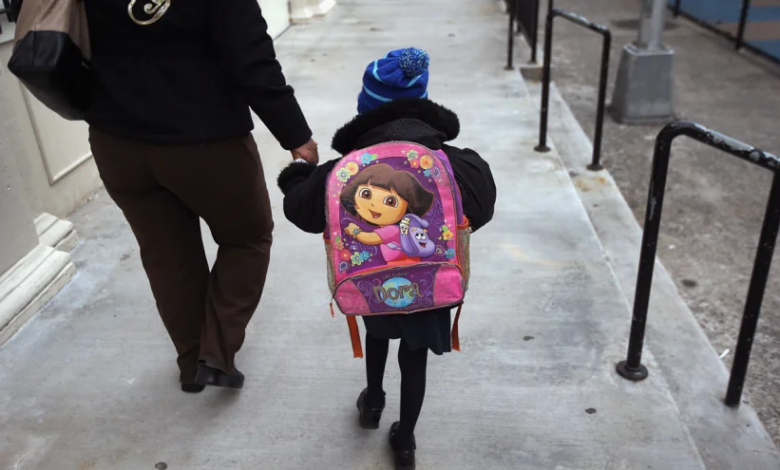
As a scholar of sociology and educationI have seen how the expanding range of school options – sometimes called school choice – has spread nationwide and is particularly a prominent factor in New York City.
I spoke with a diverse range of than 100 New York City parents across income levels and racial and ethnic backgrounds from 2014 to 2019 as part of research for my 2025 book, “Kindergarten Panic: Parental Anxiety and School Choice Inequality.”
and و of و school – تفاصيل مهمة
All of these parents felt pressure trying to select a school for their elementary school-age children, and school choice options post-COVID-19 have only increased.
Some parents experience this pressure a bit acutely than others.
Women often see their choice of school as a reflection of whether they are good moms, my interviews show. Parents of color feel pressure to find a racially inclusive school. Other parents worry about finding niche schools that offer dual-language programs, for example, or other specialties.
Navigating schools in New York City
Every year, about 65,000 New York City kindergartners are matched to than 700 public schools.
a و of و parents – تفاصيل مهمة
New York City kindergartners typically attend their nearest public school in the neighborhood and get a priority place at this school. This school is often called someone’s zoned school.
Even so, a spot at your local school isn’t guaranteed – students get priority if they apply on time.
While most kindergartners still attend their zoned schools, their attendance rate is decreasing. While 72% of kindergartners in the city attended their zoned school in the 2007-08 school year, 60% did so in the 2016-17 school year.
One reason is that since 2003, New York City parents have been able to apply to out-of-zone schools when seats were available. And in 2020, when the COVID-19 pandemic began, all public school applications moved entirely online. This shift allowed parents to easily rank 12 different school options they liked, in and outside of their zones.
school و in و their – تفاصيل مهمة
Still, New York City public schools remain one of the most segregated in the country, divided by race and class.
Pressure to be a good mom
Many of the mothers I interviewed from 2015 through 2019 said that getting their child into what they considered a “good” school reflected good mothering.
Mothers took the primary responsibility for their school search, whether they had partners or not, and regardless of their social class, as well as racial and ethnic background.
In 2017, I spoke with Janet, a white, married mother who at the time was 41 years old and had an infant and a 3-year-old. Janet worked as a web designer and lived in Queens. She explained that she started a group in 2016 to connect with other mothers, in part to discuss schools.
a و and و to – تفاصيل مهمة
Though Janet’s children were a few years away from kindergarten, she believed that she had started her research for public schools too late. She spent multiple hours each week looking up information during her limited spare time. She learned that other moms were talking to other parents, researching test results, analyzing school reviews and visiting schools in person.
Janet said she wished she had started looking for schools when her son was was 1 or 2 years old, like other mothers she knew. She expressed fear that she was failing as a mother. Eventually, Janet enrolled her son in a nonzoned public school in another Queens neighborhood.
Pressure to find an inclusive school
Regardless of their incomes, Black, Latino and immigrant families I interviewed also felt pressure to evaluate whether the public schools they considered were racially and ethnically inclusive.
Parents worried that racially insensitive policies related to bullying, curriculum and discipline would negatively affect their children.
she و was و to – تفاصيل مهمة
In 2015, I spoke with Fumi, a Black, immigrant mother of two young children. At the time, Fumi was 37 years old and living in Washington Heights in north Manhattan. She described her uncertain search for a public school.
Fumi thought that New York City’s gifted and talented programs at public schools might be a better option academically than other public schools that don’t offer an advanced track for some students. But the gifted and talented programs often lacked racial diversityand Fumi did not want her son to be the only Black student in his class.
Still, Fumi had her son tested for the 2015 gifted and talented exam and enrolled him in one of these programs for kindergarten.
Once Fumi’s son began attending the gifted and talented school, Fumi worried that the constant bullying he experienced was racially motivated.
and و the و Fumi – تفاصيل مهمة
Though Fumi remained uneasy about the bullying and lack of diversity, she decided to keep him at the school because of the school’s strong academic quality.
Pressure to find a niche school
Many of the parents I interviewed who earned than US$50,000 a year wanted to find specialty schools that offered advanced courses, dual-language programs and progressive-oriented curriculum.
Parents like Renata, a 44-year-old Asian mother of four, and Stella, a 39-year-old Black mother of one, sent their kids to out-of-neighborhood public schools.
In 2016, Renata described visiting multiple schools and researching options so she could potentially enroll her four children in different schools that met each of their particular needs.
a و of و to – تفاصيل مهمة
Stella, meanwhile, searched for schools that would de-emphasize testing, nurture her son’s creativity and provide flexible learning options.
In contrast, the working-class parents I interviewed who made less than $50,000 annually often sought schools that mirrored their own school experiences.
Few working-class parents I spoke with selected out-of-neighborhood and high academically performing schools.
New York City data points to similar results – low-income families are less likely than people earning than them to attend schools outside of their neighborhoods.
than و working-class و parents – تفاصيل مهمة
For instance, Black working-class parents like 47-year-old Risha, a mother of four, and 53-year-old Jeffery, a father of three, who attended New York City neighborhood public schools themselves as children told me in 2016 that they decided to send their children to local public schools.
Based on state performance indicators, students at these particular schools performed lower on standard assessments than schools on average.
Cracks in the system
The parents I spoke with all live in New York City, which has a uniquely complicated education system. Yet the pressures they face are reflective of the evolving public school choice landscape for parents across the country.
Parents nationwide are searching for schools with vastly different resources and concerns about their children’s future well-being and success.
the و on و schools – تفاصيل مهمة
When parents panic about kindergarten, they reveal cracks in the foundation of American schooling. In my view, parental anxiety about kindergarten is a response to an unequal, high-stakes education system.<!– Below is The Conversation’s page counter tag.
Please DO NOT REMOVE. –>

Please و DO و NOT – تفاصيل مهمة
Bailey A. BrownAssistant Professor of Sociology,Spelman College
This article is republished from The Conversation under a Creative Commons license. Read the original article.
Disclaimer: This news article has been republished exactly as it appeared on its original source, without any modification.
We do not take any responsibility for its content, which remains solely the responsibility of the original publisher.
Author:Bailey A. Brown
Published on:2025-11-28 23:30:00
Source: www.the74million.org
!function(f,b,e,v,n,t,s){if(f.fbq)return;n=f.fbq=function(){n.callMethod? n.callMethod.apply(n,arguments):n.queue.push(arguments)};if(!f._fbq)f._fbq=n; n.push=n;n.loaded=!0;n.version=’2.0′;n.queue=();t=b.createElement(e);t.async=!0; t.src=v;s=b.getElementsByTagName(e)(0);s.parentNode.insertBefore(t,s)}(window, document,’script’,’https://connect.facebook.net/en_US/fbevents.js’); fbq(‘init’, ‘626037510879173’); // 626037510879173 fbq(‘track’, ‘PageView’);{“@context”:”http://schema.org”,”@type”:”NewsArticle”,”dateCreated”:”2025-11-29T04:08:47+04:00″,”datePublished”:”2025-11-29T04:08:47+04:00″,”dateModified”:”2025-11-29T04:08:47+04:00″,”headline”:”School Admissions Anxiety Hits Parents of Young Children, Too”,”name”:”School Admissions Anxiety Hits Parents of Young Children, Too”,”keywords”:[],”url”:”https://uaetodaynews.com/school-admissions-anxiety-hits-parents-of-young-children-too-the-74/”,”description”:”A few factors have made selecting an elementary school particularly challenging in recent years. For one, there are simply more schools for parents to pick from over the past few decades, ranging from”,”copyrightYear”:”2025″,”articleSection”:”Education”,”articleBody”:”nnnA few factors have made selecting an elementary school particularly challenging in recent years. For one, there are simply more schools for parents to pick from over the past few decades, ranging from traditional public and private to a growing number of magnet and charter programs. There are also new policies in some places, such as New York Citythat allow parents to select not just their closest neighborhood public school but schools across and outside of the districts where they live.nnAs a scholar of sociology and educationI have seen how the expanding range of school options u2013 sometimes called school choice u2013 has spread nationwide and is particularly a prominent factor in New York City.nnI spoke with a diverse range of more than 100 New York City parents across income levels and racial and ethnic backgrounds from 2014 to 2019 as part of research for my 2025 book, u201cKindergarten Panic: Parental Anxiety and School Choice Inequality.u201dnnAll of these parents felt pressure trying to select a school for their elementary school-age children, and school choice options post-COVID-19 have only increased.nnSome parents experience this pressure a bit more acutely than others.nnWomen often see their choice of school as a reflection of whether they are good moms, my interviews show. Parents of color feel pressure to find a racially inclusive school. Other parents worry about finding niche schools that offer dual-language programs, for example, or other specialties.nNavigating schools in New York CitynEvery year, about 65,000 New York City kindergartners are matched to more than 700 public schools.nnNew York City kindergartners typically attend their nearest public school in the neighborhood and get a priority place at this school. This school is often called someoneu2019s zoned school.nnEven so, a spot at your local school isnu2019t guaranteed u2013 students get priority if they apply on time.nnWhile most kindergartners still attend their zoned schools, their attendance rate is decreasing. While 72% of kindergartners in the city attended their zoned school in the 2007-08 school year, 60% did so in the 2016-17 school year.nnOne reason is that since 2003, New York City parents have been able to apply to out-of-zone schools when seats were available. And in 2020, when the COVID-19 pandemic began, all public school applications moved entirely online. This shift allowed parents to easily rank 12 different school options they liked, in and outside of their zones.nnStill, New York City public schools remain one of the most segregated in the country, divided by race and class.nPressure to be a good momnMany of the mothers I interviewed from 2015 through 2019 said that getting their child into what they considered a u201cgoodu201d school reflected good mothering.nnMothers took the primary responsibility for their school search, whether they had partners or not, and regardless of their social class, as well as racial and ethnic background.nnIn 2017, I spoke with Janet, a white, married mother who at the time was 41 years old and had an infant and a 3-year-old. Janet worked as a web designer and lived in Queens. She explained that she started a group in 2016 to connect with other mothers, in part to discuss schools.nnThough Janetu2019s children were a few years away from kindergarten, she believed that she had started her research for public schools too late. She spent multiple hours each week looking up information during her limited spare time. She learned that other moms were talking to other parents, researching test results, analyzing school reviews and visiting schools in person.nnJanet said she wished she had started looking for schools when her son was was 1 or 2 years old, like other mothers she knew. She expressed fear that she was failing as a mother. Eventually, Janet enrolled her son in a nonzoned public school in another Queens neighborhood.nPressure to find an inclusive schoolnRegardless of their incomes, Black, Latino and immigrant families I interviewed also felt pressure to evaluate whether the public schools they considered were racially and ethnically inclusive.nnParents worried that racially insensitive policies related to bullying, curriculum and discipline would negatively affect their children.nnIn 2015, I spoke with Fumi, a Black, immigrant mother of two young children. At the time, Fumi was 37 years old and living in Washington Heights in north Manhattan. She described her uncertain search for a public school.nnFumi thought that New York Cityu2019s gifted and talented programs at public schools might be a better option academically than other public schools that donu2019t offer an advanced track for some students. But the gifted and talented programs often lacked racial diversityand Fumi did not want her son to be the only Black student in his class.nnStill, Fumi had her son tested for the 2015 gifted and talented exam and enrolled him in one of these programs for kindergarten.nnOnce Fumiu2019s son began attending the gifted and talented school, Fumi worried that the constant bullying he experienced was racially motivated.nnThough Fumi remained uneasy about the bullying and lack of diversity, she decided to keep him at the school because of the schoolu2019s strong academic quality.nPressure to find a niche schoolnMany of the parents I interviewed who earned more than US$50,000 a year wanted to find specialty schools that offered advanced courses, dual-language programs and progressive-oriented curriculum.nnParents like Renata, a 44-year-old Asian mother of four, and Stella, a 39-year-old Black mother of one, sent their kids to out-of-neighborhood public schools.nnIn 2016, Renata described visiting multiple schools and researching options so she could potentially enroll her four children in different schools that met each of their particular needs.nnStella, meanwhile, searched for schools that would de-emphasize testing, nurture her sonu2019s creativity and provide flexible learning options.nnIn contrast, the working-class parents I interviewed who made less than $50,000 annually often sought schools that mirrored their own school experiences.nnFew working-class parents I spoke with selected out-of-neighborhood and high academically performing schools.nnNew York City data points to similar results u2013 low-income families are less likely than people earning more than them to attend schools outside of their neighborhoods.nnFor instance, Black working-class parents like 47-year-old Risha, a mother of four, and 53-year-old Jeffery, a father of three, who attended New York City neighborhood public schools themselves as children told me in 2016 that they decided to send their children to local public schools.nnBased on state performance indicators, students at these particular schools performed lower on standard assessments than schools on average.nCracks in the systemnThe parents I spoke with all live in New York City, which has a uniquely complicated education system. Yet the pressures they face are reflective of the evolving public school choice landscape for parents across the country.nnParents nationwide are searching for schools with vastly different resources and concerns about their childrenu2019s future well-being and success.nnWhen parents panic about kindergarten, they reveal cracks in the foundation of American schooling. In my view, parental anxiety about kindergarten is a response to an unequal, high-stakes education system.nnBailey A. BrownAssistant Professor of Sociology, Spelman CollegennThis article is republished from The Conversation under a Creative Commons license. Read the original article.nnnn !function(f,b,e,v,n,t,s){if(f.fbq)return;n=f.fbq=function(){n.callMethod?n n.callMethod.apply(n,arguments):n.queue.push(arguments)};if(!f._fbq)f._fbq=n;n n.push=n;n.loaded=!0;n.version=’2.0′;n.queue=();t=b.createElement(e);t.async=!0;n t.src=v;s=b.getElementsByTagName(e)(0);s.parentNode.insertBefore(t,s)}(window,n document,’script’,’https://connect.facebook.net/en_US/fbevents.js’);n fbq(‘init’, ‘626037510879173’); // 626037510879173n fbq(‘track’, ‘PageView’);n nnnnnDisclaimer: This news article has been republished exactly as it appeared on its original source, without any modification. nWe do not take any responsibility for its content, which remains solely the responsibility of the original publisher.nnnnnnAuthor: Bailey A. BrownnPublished on: 2025-11-28 23:30:00nSource: www.the74million.orgn”,”publisher”:{“@id”:”#Publisher”,”@type”:”Organization”,”name”:”uaetodaynews”,”logo”:{“@type”:”ImageObject”,”url”:”https://uaetodaynews.com/wp-content/uploads/2025/09/images-e1759081190269.png”},”sameAs”:[“https://www.facebook.com/uaetodaynewscom”,”https://www.pinterest.com/uaetodaynews/”,”https://www.instagram.com/uaetoday_news_com/”]},”sourceOrganization”:{“@id”:”#Publisher”},”copyrightHolder”:{“@id”:”#Publisher”},”mainEntityOfPage”:{“@type”:”WebPage”,”@id”:”https://uaetodaynews.com/school-admissions-anxiety-hits-parents-of-young-children-too-the-74/”,”breadcrumb”:{“@id”:”#Breadcrumb”}},”author”:{“@type”:”Person”,”name”:”uaetodaynews”,”url”:”https://uaetodaynews.com/author/arabsongmedia-net/”},”image”:{“@type”:”ImageObject”,”url”:”https://i0.wp.com/uaetodaynews.com/wp-content/uploads/2025/11/parents-young-kids-school-admissions-825×495.png?fit=825%2C495&ssl=1″,”width”:1200,”height”:495}}
Disclaimer: This news article has been republished exactly as it appeared on its original source, without any modification.
We do not take any responsibility for its content, which remains solely the responsibility of the original publisher.
Author: uaetodaynews
Published on: 2025-11-29 02:08:00
Source: uaetodaynews.com