
Join our zero2eight Substack community for discussion about the latest news in early care and education.Sign up now.
Join و our و zero2eight – تفاصيل مهمة
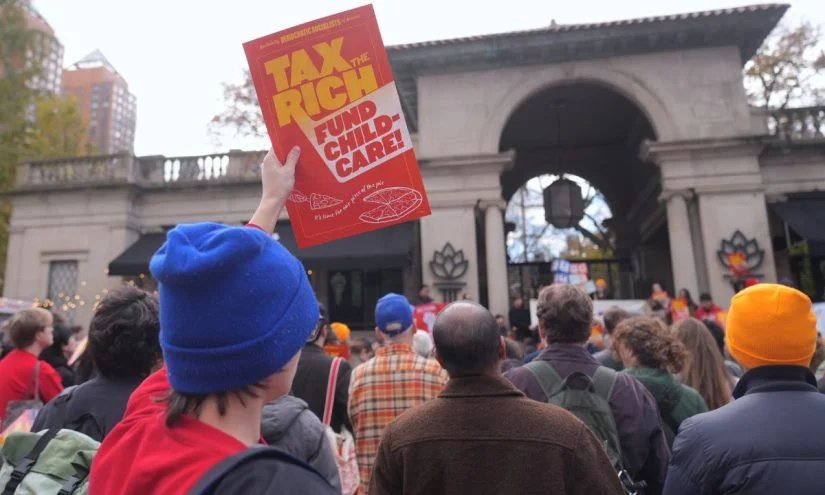
America has entered a stormy period for the provision of early care and education. The expiration of pandemic-era funds combined with widespread state and federal budget cuts have led to sweeping cutbacks in many regions, causing program closures and reductions in the aid offered to families. But amid these difficulties, there’s a notable trend that may hold promise.
Some states and localities have created a source of dedicated funding, meaning a revenue stream that’s designated specifically to be used for child care, creating stability for providers and families. And according to a recent report published by the Children’s Funding Project (CFP), a national nonprofit that helps states and localities secure money for children’s issues, these funds have helped states navigate the turbulence.
Dedicated funding tackles a simple, yet bedeviling problem: year after year, advocates must fight for state general funds, but it’s frequently a losing battle since too many factors are outside of their control. The health of a state’s economy, the priorities of constantly rotating elected officials, and the actions taken by Congress and the president all shape how much available funding a state has during a given budget cycle — and how it will be divvied up.
Since states are legally required to maintain a balanced budget, the squeeze is real. And unfortunately, even states that are very friendly toward early care and education issues will cut them when faced with tough math.
a و and و the – تفاصيل مهمة
Dedicated funding sidesteps the general fund scrum. The CFP report explained that “state dedicated funds are distinct streams of public revenue that are set aside for specific purposes, typically dedicated through action by a legislative body, approved by voters via ballot measure, or a combination of these approaches.” Because they have their own built-in power source, they are relatively insulated from the vagaries of state governance.
There’s no singular model for advancing a dedicated fund. The funding source and path to enactment vary by state and locality, depending on what taxes can be levied, how existing revenues may be used, and the political feasibility of potential legislative or ballot measures.
According to the CFP report, 22 states have some version of a dedicated fund to support children and youth — and the rate of adoption has increased in recent years, including at the local level. The report notes that jurisdictions have tapped a range of funding sources including taxes on nicotine, marijuana, gambling, payroll, sales, and capital gains, and, in the case of New Mexico, oil and gas revenues.
The mechanism for establishing funds is also diverse, as some states have a fairly low bar for citizen-initiated ballot initiatives, while others don’t allow propositions at all and instead require legislative action. Increasingly, states are creating trust funds that hold the revenues like an endowmentallocating an annual percentage for early childhood services.

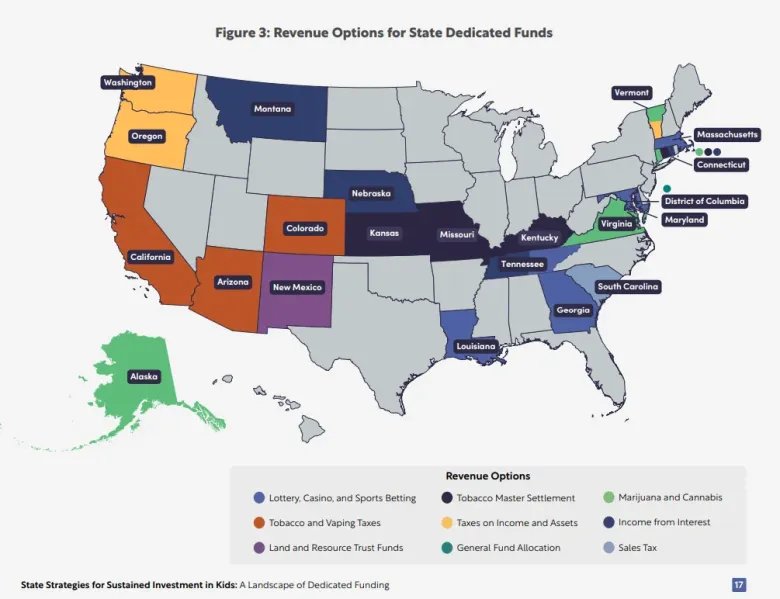
The value and viability of dedicated funding sources was borne out in last month’s elections. In Colorado, for instance, several localities — including a consortium of three ski-heavy mountain counties, and one politically mixed county in northern Colorado — voted for dedicated funding measures via lodging or sales taxes. Those revenues will be especially important as Colorado wrestles with statewide funding challenges that are leading to subsidy program enrollment freezes in many counties.
Other states established their dedicated funding practices years ago. California, for example, has one of the longest-standing dedicated funding sources due to the 1998 passage of Proposition 10, a campaign famously spearheaded by filmmaker Rob Reiner. Proposition 10 levied a 50-cent tax on tobacco and the revenues built a network of early childhood programs operating under hub organizations known as the First 5 Initiative.
for و of و a – تفاصيل مهمة
Of course, simply establishing a dedicated fund is no panacea. To create a successful solution, the funds have to be adequate. Kentucky, for example, established a fund sourced from its Tobacco Master Settlement agreement, which draws down around $26 million a year.
This amount isn’t insignificant, but it’s not enough funding to majorly transform its early care and education system. Where and how the funding flows, and who has a say in deciding that, is also key.
Additionally, precedent shows there can be a risk of uneven results if the funding source itself is variable, such as tapping so-called “sin taxes.” This has been proven most dramatically in states like California that rely on tobacco taxes. As fewer individuals smoke (which, most would agree is broadly a positive development), the revenues from tobacco taxes have steadily declined, pinching early childhood services provided through First 5 programs across the state.
As a majority of states face down what is likely to be years of budget pain, dedicated funding sources for early care and education should be a top-tier strategy. State experiences to date suggest that champions would do well to identify funding sources that are both relatively stable and can generate substantial revenues, such as payroll taxes or income taxes for high-earning households. Whatever specific tactics are chosen, the that child care funding can be taken out of the Hunger Games arena that is state budgeting, the better.
that و of و to – تفاصيل مهمة
Did you use this article in your work?
We’d love to hear how The 74’s reporting is helping educators, researchers, and policymakers.Tell us how
how و
و We’d – تفاصيل مهمة
Disclaimer: This news article has been republished exactly as it appeared on its original source, without any modification.
We do not take any responsibility for its content, which remains solely the responsibility of the original publisher.
!function(f,b,e,v,n,t,s){if(f.fbq)return;n=f.fbq=function(){n.callMethod? n.callMethod.apply(n,arguments):n.queue.push(arguments)};if(!f._fbq)f._fbq=n; n.push=n;n.loaded=!0;n.version=’2.0′;n.queue=();t=b.createElement(e);t.async=!0; t.src=v;s=b.getElementsByTagName(e)(0);s.parentNode.insertBefore(t,s)}(window, document,’script’,’https://connect.facebook.net/en_US/fbevents.js’); fbq(‘init’, ‘626037510879173’); // 626037510879173 fbq(‘track’, ‘PageView’);{“@context”:”http://schema.org”,”@type”:”NewsArticle”,”dateCreated”:”2025-12-04T10:57:59+04:00″,”datePublished”:”2025-12-04T10:57:59+04:00″,”dateModified”:”2025-12-04T10:57:59+04:00″,”headline”:”Amid Budget Cuts to Child Care, Dedicated Funds Hold Promise”,”name”:”Amid Budget Cuts to Child Care, Dedicated Funds Hold Promise”,”keywords”:[],”url”:”https://uaetodaynews.com/amid-budget-cuts-to-child-care-dedicated-funds-hold-promise-the-74/”,”description”:”Join our zero2eight Substack community for more discussion about the latest news in early care and education. Sign up now. America has entered a stormy period for the provision of early care and educa”,”copyrightYear”:”2025″,”articleSection”:”Education”,”articleBody”:”nnn n Join our zero2eight Substack community for more discussion about the latest news in early care and education. Sign up now.n n n n nAmerica has entered a stormy period for the provision of early care and education. The expiration of pandemic-era funds combined with widespread state and federal budget cuts have led to sweeping cutbacks in many regions, causing program closures and reductions in the aid offered to families. But amid these difficulties, thereu2019s a notable trend that may hold promise. nnnnSome states and localities have created a source of dedicated funding, meaning a revenue stream thatu2019s designated specifically to be used for child care, creating more stability for providers and families. And according to a recent report published by the Childrenu2019s Funding Project (CFP), a national nonprofit that helps states and localities secure money for childrenu2019s issues, these funds have helped states navigate the turbulence.nnnnnnnnDedicated funding tackles a simple, yet bedeviling problem: year after year, advocates must fight for state general funds, but itu2019s frequently a losing battle since too many factors are outside of their control. The health of a stateu2019s economy, the priorities of constantly rotating elected officials, and the actions taken by Congress and the president all shape how much available funding a state has during a given budget cycle u2014 and how it will be divvied up. Since states are legally required to maintain a balanced budget, the squeeze is real. And unfortunately, even states that are very friendly toward early care and education issues will cut them when faced with tough math. nnnnDedicated funding sidesteps the general fund scrum. The CFP report explained that u201cstate dedicated funds are distinct streams of public revenue that are set aside for specific purposes, typically dedicated through action by a legislative body, approved by voters via ballot measure, or a combination of these approaches.u201d Because they have their own built-in power source, they are relatively insulated from the vagaries of state governance.nnnnThereu2019s no singular model for advancing a dedicated fund. The funding source and path to enactment vary by state and locality, depending on what taxes can be levied, how existing revenues may be used, and the political feasibility of potential legislative or ballot measures.nnnnRelatedOregon May Be the Canary in the Coal Mine for Child Care CutsnnnnAccording to the CFP report, 22 states have some version of a dedicated fund to support children and youth u2014 and the rate of adoption has increased in recent years, including at the local level. The report notes that jurisdictions have tapped a range of funding sources including taxes on nicotine, marijuana, gambling, payroll, sales, and capital gains, and, in the case of New Mexico, oil and gas revenues. The mechanism for establishing funds is also diverse, as some states have a fairly low bar for citizen-initiated ballot initiatives, while others donu2019t allow propositions at all and instead require legislative action. Increasingly, states are creating trust funds that hold the revenues like an endowmentallocating an annual percentage for early childhood services.nnnnMap of revenue options for state dedicated funds from State Strategies for Sustained Investment in Kids: A Landscape of Dedicated Funding, a report published by Childrenu2019s Funding Project (Childrenu2019s Funding Project).nnnnThe value and viability of dedicated funding sources was borne out in last monthu2019s elections. In Colorado, for instance, several localities u2014 including a consortium of three ski-heavy mountain counties, and one politically mixed county in northern Colorado u2014 voted for dedicated funding measures via lodging or sales taxes. Those revenues will be especially important as Colorado wrestles with statewide funding challenges that are leading to subsidy program enrollment freezes in many counties.nnnnOther states established their dedicated funding practices years ago. California, for example, has one of the longest-standing dedicated funding sources due to the 1998 passage of Proposition 10, a campaign famously spearheaded by filmmaker Rob Reiner. Proposition 10 levied a 50-cent tax on tobacco and the revenues built a network of early childhood programs operating under hub organizations known as the First 5 Initiative. nnnnOf course, simply establishing a dedicated fund is no panacea. To create a successful solution, the funds have to be adequate. Kentucky, for example, established a fund sourced from its Tobacco Master Settlement agreement, which draws down around $26 million a year. This amount isnu2019t insignificant, but itu2019s not enough funding to majorly transform its early care and education system. Where and how the funding flows, and who has a say in deciding that, is also key. nnnnRelatedAmid Budget Cuts to Child Care, Dedicated Funds Hold PromisennnnAdditionally, precedent shows there can be a risk of uneven results if the funding source itself is variable, such as tapping so-called u201csin taxes.u201d This has been proven most dramatically in states like California that rely on tobacco taxes. As fewer individuals smoke (which, most would agree is broadly a positive development), the revenues from tobacco taxes have steadily declined, pinching early childhood services provided through First 5 programs across the state.nnnnAs a majority of states face down what is likely to be years of budget pain, dedicated funding sources for early care and education should be a top-tier strategy. State experiences to date suggest that champions would do well to identify funding sources that are both relatively stable and can generate substantial revenues, such as payroll taxes or income taxes for high-earning households. Whatever specific tactics are chosen, the more that child care funding can be taken out of the Hunger Games arena that is state budgeting, the better.nn n n n Did you use this article in your work?
nWeu2019d love to hear how The 74u2019s reporting is helping educators, researchers, and policymakers. Tell us hown n nnn !function(f,b,e,v,n,t,s){if(f.fbq)return;n=f.fbq=function(){n.callMethod?n n.callMethod.apply(n,arguments):n.queue.push(arguments)};if(!f._fbq)f._fbq=n;n n.push=n;n.loaded=!0;n.version=’2.0′;n.queue=();t=b.createElement(e);t.async=!0;n t.src=v;s=b.getElementsByTagName(e)(0);s.parentNode.insertBefore(t,s)}(window,n document,’script’,’https://connect.facebook.net/en_US/fbevents.js’);n fbq(‘init’, ‘626037510879173’); // 626037510879173n fbq(‘track’, ‘PageView’);n nnnnnDisclaimer: This news article has been republished exactly as it appeared on its original source, without any modification. nWe do not take any responsibility for its content, which remains solely the responsibility of the original publisher.nnnnnnAuthor: Elliot HaspelnPublished on: 2025-12-03 19:30:00nSource: www.the74million.orgn”,”publisher”:{“@id”:”#Publisher”,”@type”:”Organization”,”name”:”uaetodaynews”,”logo”:{“@type”:”ImageObject”,”url”:”https://uaetodaynews.com/wp-content/uploads/2025/09/images-e1759081190269.png”},”sameAs”:[“https://www.facebook.com/uaetodaynewscom”,”https://www.pinterest.com/uaetodaynews/”,”https://www.instagram.com/uaetoday_news_com/”]},”sourceOrganization”:{“@id”:”#Publisher”},”copyrightHolder”:{“@id”:”#Publisher”},”mainEntityOfPage”:{“@type”:”WebPage”,”@id”:”https://uaetodaynews.com/amid-budget-cuts-to-child-care-dedicated-funds-hold-promise-the-74/”,”breadcrumb”:{“@id”:”#Breadcrumb”}},”author”:{“@type”:”Person”,”name”:”uaetodaynews”,”url”:”https://uaetodaynews.com/author/arabsongmedia-net/”},”image”:{“@type”:”ImageObject”,”url”:”https://i0.wp.com/uaetodaynews.com/wp-content/uploads/2025/12/child-care-funding-825×495.jpg?fit=825%2C495&ssl=1″,”width”:1200,”height”:495}}
Disclaimer: This news article has been republished exactly as it appeared on its original source, without any modification.
We do not take any responsibility for its content, which remains solely the responsibility of the original publisher.
Author: uaetodaynews
Published on: 2025-12-04 08:57:00
Source: uaetodaynews.com