
Restaurant Norms May Be Making Us Miserable, Scientists Say
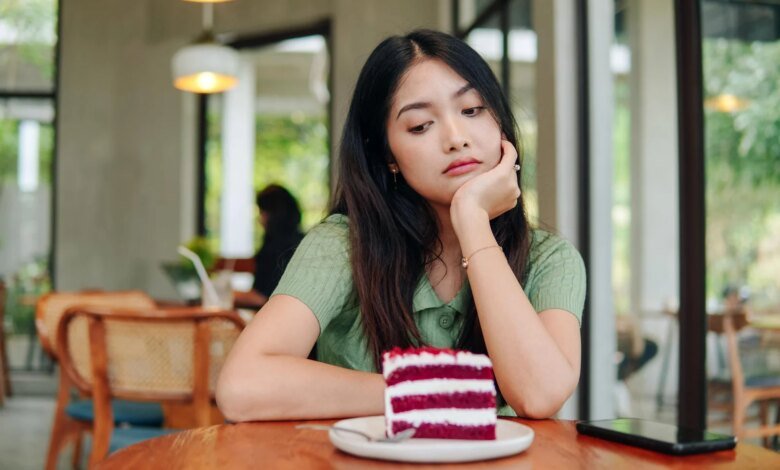

New research reveals that most diners feel uneasy eating before everyone at the table has been served, even though their companions typically wouldn’t mind if they did.
Restaurants and dinner hosts may be able to create comfortable dining experiences by ensuring that everyone at the table is served at the same time, according to a new study.
Most people recognize the familiar moment at a restaurant or dinner party when their meal arrives, yet they hesitate to begin eating because others are still waiting. This long-standing custom was the focus of new research co-authored by Bayes Business School. The findings show that individuals tend to worry about breaking this norm themselves than about others doing so.
the و to و at – تفاصيل مهمة
The study, conducted by Irene Scopelliti, Professor of Marketing and Behavioural Science, and Janina Steinmetz, Professor of Marketing at Bayes, together with Dr Anna Paley from the Tilburg School of Economics and Management, explored how people judge their own behavior compared with what they expect from others in the same situation. Their work drew on six separate experiments.
Participants were asked to imagine sharing a meal with a friend. In some scenarios, they received their food first; in others, they watched their dining partner receive a meal before them.
Those who were served first rated, on a numerical scale, how long they felt they should wait or whether they should start eating. Those who were still waiting evaluated what they believed their companion ought to do.
The results showed a clear gap between how people judge themselves and how they judge others. Individuals served first thought they should wait significantly longer than their dining partners actually expected them to.
they و a و their – تفاصيل مهمة
Why People Judge Themselves Harshly
Further experiments explored why this happens. Participants were asked how they would feel about their co-diner eating or waiting, and how they would expect their companion to feel about them. Results showed that people expected to feel better about waiting themselves – and worse about starting to eat – if their food arrived first, than they predicted others would feel in the same situation.
The study also tested whether interventions might influence behavior, such as encouraging participants to consider their co-diner’s perspective or telling them that their dining partner had explicitly invited them to start eating.
Implications for Restaurants and Social Settings
The research suggests this is why people would still encourage co-diners to break the norm, and that restaurants should avoid putting diners in this situation where possible.
Professor Steinmetz said, “The decision of when to start eating food in the company of others is a very common dilemma.
to و The و their – تفاصيل مهمة
“Norm adherence dictates that we wait until all food is served before starting, and disregarding it feels rude and discourteous to us. Surprisingly, this feeling barely changes even when another person explicitly asks us to go ahead. It occurs because people have greater access to their own internal feelings – such as appearing considerate or avoiding social discomfort – than to others’ psychological experiences.
“In these situations, we should be aware that we’re only waiting for our own benefit, and co-diners probably mind far less than we think if we wanted to go ahead and eat.
“People will wait to feel polite, but if the quality of their food is dependent on factors like temperature, it may not taste as nice when they finally do start eating.”
Psychological Access and Broader Implications
Professor Scopelliti added, “This is not just about politeness: it’s about psychological access.
we و and و if – تفاصيل مهمة
“We can feel our own internal discomfort, guilt, and the positive feelings from appearing considerate, but we can’t fully access what others are experiencing internally. So, while we might feel genuinely awful about eating before others get their food, we assume others won’t feel as strongly about it.
“Results of our study have implications for restaurants and beyond. Any service where people receive food at different times within a group creates similar psychological dynamics. Providers often optimize for efficiency, without realizing that some people experience genuine discomfort when they receive service before others in their group.
“The research shows how much we systematically underestimate others’ internal emotional experiences, which contributes to broader understanding of social norms and group dynamics.”
Reference: “Wait or Eat? self-other differences in a commonly held food norm” by Anna Paley, Irene Scopelliti and Janina Steinmetz, 22 April 2025,Appetite.
DOI: 10.1016/j.appet.2025.108021
and و of و for – تفاصيل مهمة
Never miss a breakthrough: Join the SciTechDaily newsletter.
Follow us on Google and Google News.
Disclaimer: This news article has been republished exactly as it appeared on its original source, without any modification.
We do not take any responsibility for its content, which remains solely the responsibility of the original publisher.
Author:City St George’s, University of London
Published on:2025-12-06 00:34:00
Source: scitechdaily.com
Disclaimer: This news article has been republished exactly as it appeared on its original source, without any modification.
We do not take any responsibility for its content, which remains solely the responsibility of the original publisher.
Author: uaetodaynews
Published on: 2025-12-06 00:09:00
Source: uaetodaynews.com