Space Dust Reveals The Arctic Is Melting Faster Than Expected
Space Dust Reveals The Arctic Is Melting Faster Than Expected
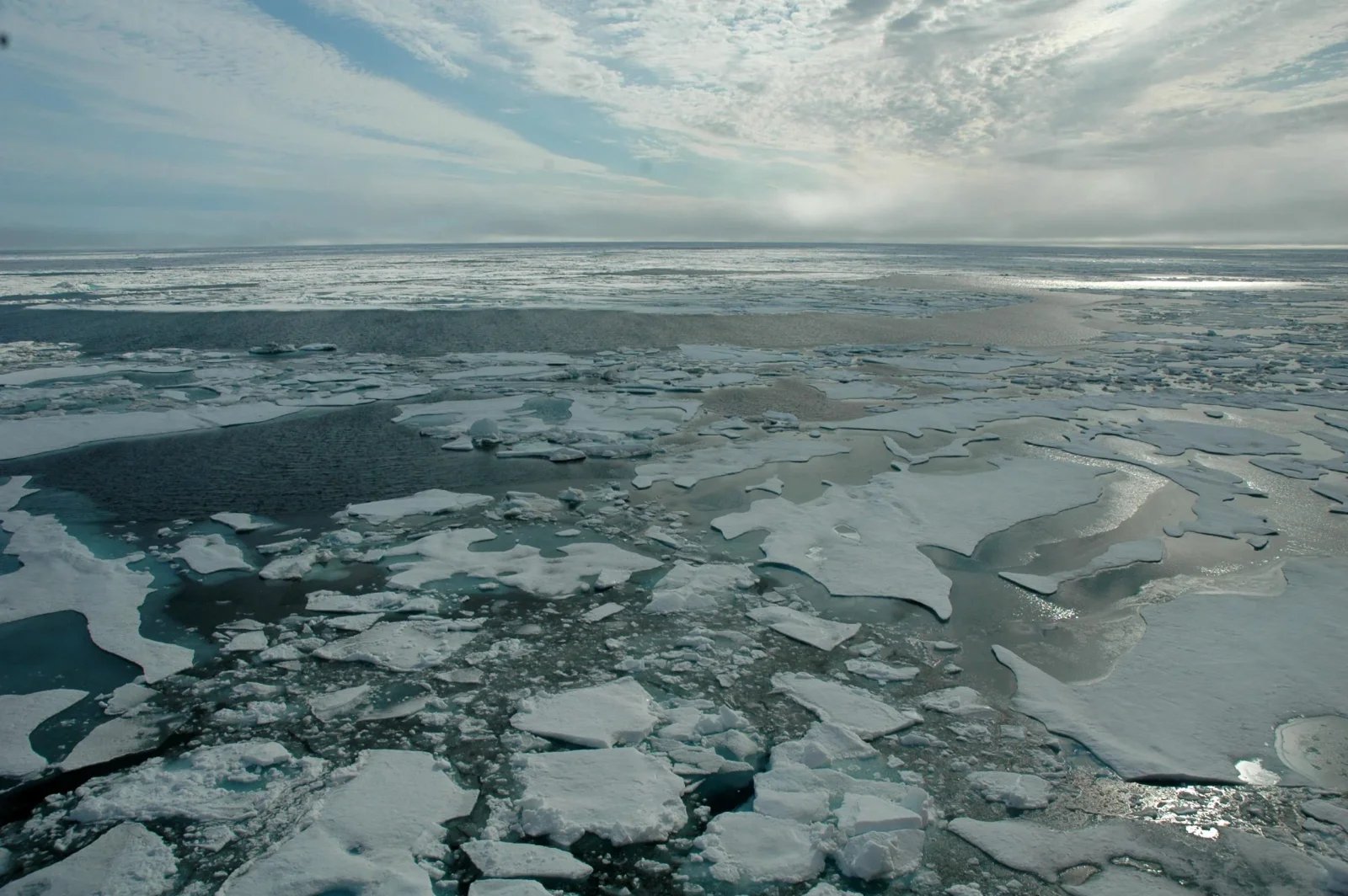
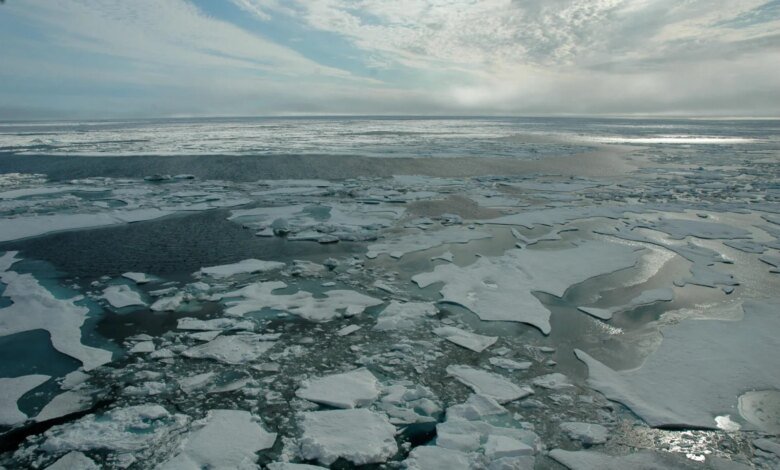
Cosmic dust trapped, or blocked, by Arctic ice allowed researchers to map 30,000 years of sea-ice history. Their findings show strong connections between melting ice, nutrient cycling, and future changes to the Arctic food web.
Arctic sea ice has dropped by than 42% since 1979when satellite observations first became consistent enough to track long-term trends. As the ice thins and retreats, larger areas of open water are exposed to sunlight.
Ice reflects much of that sunlight, but darker water absorbs heat, which speeds up warming and further reduces ice cover. Climate projections suggest that the Arctic could experience ice-free summers within the next few decades, and researchers are still working to understand how this rapid shift may affect ecosystems and human communities.
Using Cosmic Dust to Trace Ancient Ice Patterns
Scientists have long known that small particles from space settle onto Earth at a steady rate and accumulate in ocean sediments. A recently published study inSciencereports that examining where this cosmic dust appears, and where it is absent, can reveal how sea ice changed over thousands of years.
and و ice و the – تفاصيل مهمة
“If we can project the timing and spatial patterns of ice coverage decline in the future, it will help us understand warming, predict changes to food webs and fishing, and prepare for geopolitical shifts,” said Frankie Pavia, a UW assistant professor of oceanography, who led the study.
What Makes Cosmic Dust a Useful Tool
Cosmic dust forms when stars explode or when comets break apart, and some of these particles pick up a rare type of helium called helium-3 as they pass near the sun. Researchers track helium-3 to separate cosmic dust from material originating on Earth.
“It’s like looking for a needle in a haystack,” Pavia said. “You’ve got this small amount of cosmic dust raining down everywhere, but you’ve also got Earth sediments accumulating pretty fast.”
For this project, Pavia focused on areas where the dust did not appear.
a و dust و of – تفاصيل مهمة
“During the last ice age, there was almost no cosmic dust in the Arctic sediments,” he said.
Reconstructing 30,000 Years of Arctic Ice
The research team proposed that cosmic dust could act as a stand-in for satellite measurements. Sea ice prevents dust from reaching the seafloor, while open water allows the particles to settle into sediment. By measuring cosmic dust in sediment cores collected from three Arctic locations, the scientists reconstructed sea ice history over the past 30,000 years.
The three sites in the study “span a gradient of modern ice coverage,” Pavia said. One near the North Pole is covered in ice year-round.
Another lies near the seasonal minimum ice edge in September. The third site was consistently ice-covered in 1980 but now experiences seasonal periods without ice.
the و ice و in – تفاصيل مهمة
The results showed that times with permanent ice cover matched periods with very little cosmic dust in the sediments. This pattern also appeared during the last ice age about 20,000 years ago. As the planet warmed and ice retreated, cosmic dust began to accumulate again.
Ice Loss and Shifting Arctic Nutrients
The researchers then compared their ice history with data on nutrient availability and found that nutrient consumption was highest when sea ice was low and decreased as ice expanded.
The nutrient information comes from tiny shells once occupied by foraminifera, organisms that process nitrogen. Chemical signatures in their shells reveal how much of the available nutrients these organisms used while alive.
“As ice decreases in the future, we expect to see increased consumption of nutrients by phytoplankton in the Arctic, which has consequences for the food web,” Pavia said.
ice و the و and – تفاصيل مهمة
Why Nutrient Use Is Changing
research is needed to determine what drives the shifts in nutrient use. One possibility is that reduced ice cover increasesphotosynthesisat the surface, which leads to higher nutrient uptake. Another suggests that melting ice dilutes nutrient concentrations.
Both ideas can appear as increased consumption, but only the first would signal a true rise in marine productivity.
Reference: “Cosmic dust reveals dynamic shifts in central Arctic sea-ice coverage over the past 30,000 years” by Frank J. Pavia, Jesse R. Farmer, Laura Gemery, Thomas M.
Cronin, Jonathan Treffkorn and Kenneth A. Farley, 6 November 2025,Science.
DOI: 10.1126/science.adv5767
the و in و Both – تفاصيل مهمة
Additional co-authors include Jesse R. Farmer at the University of Massachusetts Boston; Laura Gemery and Thomas M.
Cronin at the United States Geological Survey; and Jonathan Treffkorn and Kenneth A. Farley at Caltech.
This study was funded by the National Science Foundation and a Foster and Coco Stanback Postdoctoral Fellowship.
Never miss a breakthrough: Join the SciTechDaily newsletter.
Follow us on Google and Google News.
and و the و at – تفاصيل مهمة
Disclaimer: This news article has been republished exactly as it appeared on its original source, without any modification. We do not take any responsibility for its content, which remains solely the responsibility of the original publisher.
Author:University of Washington
Published on:2025-12-11 14:58:00
Source: scitechdaily.com
Disclaimer: This news article has been republished exactly as it appeared on its original source, without any modification.
We do not take any responsibility for its content, which remains solely the responsibility of the original publisher.
Author: uaetodaynews
Published on: 2025-12-11 13:03:00
Source: uaetodaynews.com

Default author bio in English. Add your expertise, links, and contact info here to boost E-E-A-T. | نبذة افتراضية عن الكاتب بالعربية. أضف خبراتك، روابطك، ومعلومات الاتصال هنا لتعزيز E-E-A-T.